Local SEO for Repair Shops: Get Found on Google Maps (2026 Guide)
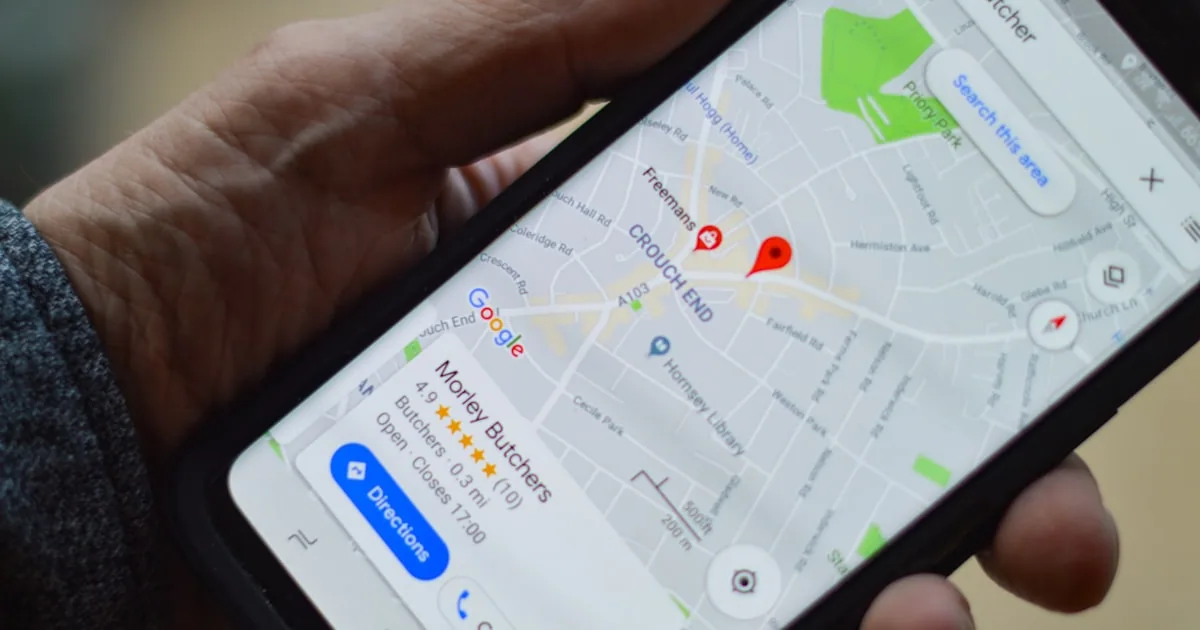
When someone cracks their phone screen, they don't browse Instagram for a repair shop. They Google “phone repair near me” and pick one of the top 3 results on the map. If your shop isn't there, you're invisible.
Local SEO isn't complicated. It's a checklist. Here's what actually moves the needle for repair shops.
Google Business Profile: your most important marketing asset
Your Google Business Profile (GBP) is the single biggest factor in whether you show up on Google Maps. A complete profile outranks an incomplete one — every time.
Here's the full checklist:
- Business name — your real business name. Don't stuff keywords in it (Google penalizes this).
- Primary category — “Mobile Phone Repair Shop” or “Electronics Repair Shop.” Pick the most specific one.
- Secondary categories — add “Computer Repair Service,” “Screen Repair Service,” etc.
- Hours — accurate and updated. Include holiday hours.
- Phone number — local number, not toll-free.
- Website — link to your site (if you need one, check our repair shop website checklist).
- Services — list every repair you offer with descriptions and price ranges.
- Photos — 10+ photos minimum. Your storefront, workbench, before/after repairs, your team. Google prioritizes profiles with recent photos.
- Business description — 750 characters. Include your city, services, and what makes you different.
- FAQ content — Google retired the GBP Q&A feature in December 2025, so put common questions (“Do you fix water damage?” “Do you offer a warranty?”) on your website with FAQ schema instead. That markup now feeds Google's AI answers in Maps.
Update your profile monthly with new photos and posts. Google rewards activity.
Why do Google reviews outrank almost everything else?
Reviews are the number one differentiator in local search. A shop with 150 reviews at 4.7 stars will outrank a shop with 12 reviews at 5.0 stars. Volume and recency matter more than perfection. For a real-market look at the actual thresholds, the team at Georgian Bay SEO broke down how many Google reviews it takes to rank first in a small Ontario market, with live counts from the businesses holding the top map spots. Their September 2026 re-count of 22 Collingwood service categories found the panel added 144 Google reviews in 26 days, and 72% of the businesses added none. The shops that keep asking are the ones pulling away.
Your review strategy:
- Ask every customer — not just the happy ones. Most satisfied customers will leave a review if you make it easy.
- Make it one-tap easy — send a direct Google review link via text. No “search for us on Google” instructions. See our guide on setting up your Google review link.
- Time it right — ask right after pickup, when satisfaction is highest.
- Respond to every review — good or bad. Google counts owner responses as engagement.
For exact scripts and templates, read our post on how to ask customers for reviews.
Which local keywords should you target?
Your website needs to tell Google where you are and what you do. This means including location-specific keywords naturally in your content:
- Title tags — “Phone Repair in [City] | [Business Name]”
- H1 heading — “[City]'s Trusted Phone & Electronics Repair Shop”
- Service pages — create individual pages for each service: “iPhone Screen Repair in [City],” “Samsung Battery Replacement in [City]”
- Footer — full address, phone number, service area
Don't keyword-stuff. Write naturally, but make sure Google knows your city and services. If you serve multiple cities, create a page for each one.
How do you build citations that actually matter?
Citations are online mentions of your business name, address, and phone number (NAP). Consistent citations across the web tell Google you're legitimate.
The directories that matter most for repair shops:
- Google Business Profile (already covered)
- Apple Maps — via Apple Business Connect
- Yelp — claim and complete your listing
- Facebook Business Page — with matching NAP
- Bing Places — easy to set up, often overlooked
- Better Business Bureau — adds trust signals
- Local chamber of commerce — strong local backlink
Critical rule: your name, address, and phone number must be identical everywhere. “123 Main St” on Google and “123 Main Street” on Yelp confuses Google. Pick one format and stick to it.
Website SEO basics for repair shop owners
You don't need to be an SEO expert. But your website needs these basics:
- Mobile-friendly — 70%+ of “near me” searches happen on phones. If your site isn't mobile-optimized, Google deprioritizes it.
- Fast loading — under 3 seconds. Compress images, use a decent host.
- Clear service pages — one page per major service, with pricing, process, and warranty info.
- Schema markup — LocalBusiness schema tells Google your address, hours, and services in a format it can read directly. Your web developer can add this in 20 minutes.
- Blog content — publish answers to common questions: “Is it worth repairing a cracked iPad screen?” “How long does a battery replacement take?” Each post is a chance to rank for a new search term.
Automate review collection to climb Google Maps rankings
The biggest gap between repair shops that rank on Google Maps and those that don't? Consistent reviews. Shops that ask manually get a burst of reviews, then forget for months. Shops that automate it get a steady stream.
FixyFlow sends an automatic review request via SMS after every completed job. The customer taps one link and goes straight to your Google review page. No extra steps, no forgetting, no awkward in-person asks. Over time, this compounds — 5 reviews per week adds up to 250+ in a year, which puts you firmly in the top of local search results.
Local SEO is a long game, but it starts with doing the basics right. Complete your profile, collect reviews consistently, and make sure Google knows where you are and what you fix.