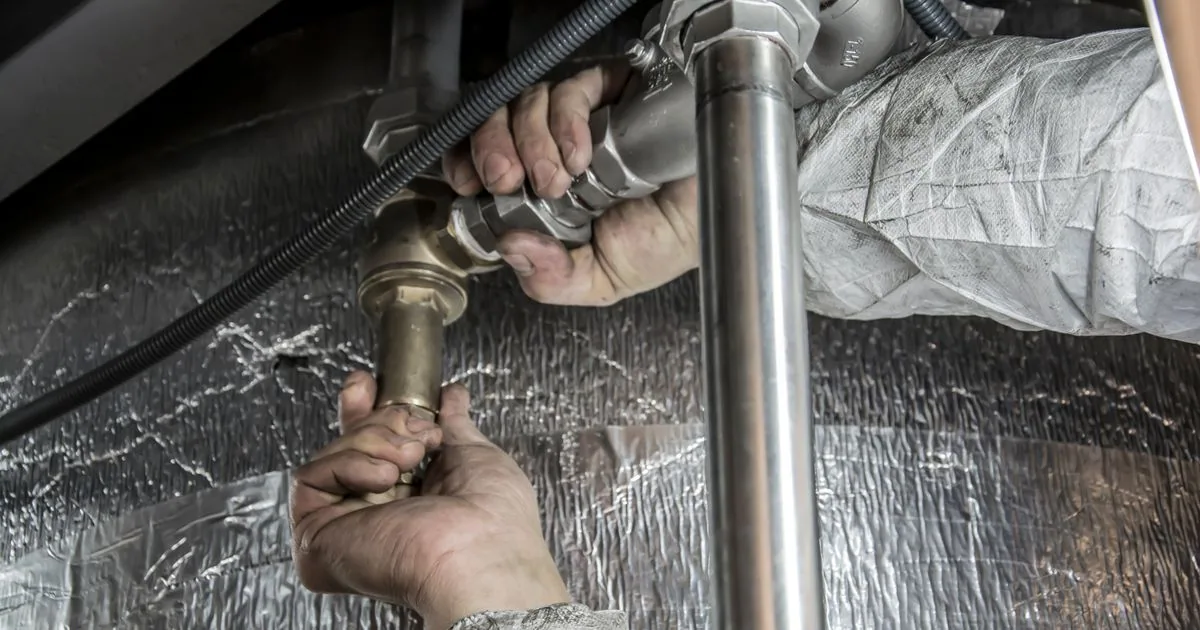
Backflow Testing in Ontario: Rules, Costs and Deadlines
Last updated: 2026-08-22 · Rules verified against the Ontario Building Code guidance, OWWA, and each city's published program pages. Bylaws change - confirm your city's current requirements before relying on them.
In Ontario, a backflow preventer must be tested once a year by a certified cross-connection control specialist, plus at installation and after any repair - but the annual requirement comes from your municipality's water bylaw, not from a single provincial law. The Ontario Building Code requires the device itself and says testing must conform to CSA B64.10; cities like Toronto, Hamilton, Ottawa, Peel, Guelph, London and Waterloo each run their own enforcement programs with their own deadlines, fees and paperwork. This guide covers all of it: the rules, a seven-city comparison, real Ontario costs, and (for plumbers) why this is one of the best recurring-revenue lines in the trade.
Why does this rule exist at all?
Because of days like March 15, 2005 in Stratford. A car wash's booster pump pushed more than 2,000 litres of wax-based cleaning solution backwards into the municipal water main, and residents started calling the city about pink, frothy tap water. Roughly 30,000 people went under a drinking-water advisory, 19 sought medical attention, and the cleanup cost the city about $100,000 in staff overtime alone. The owners were fined $75,000. The detail that matters for this article: the car wash had a backflow preventer - a bypass line with a booster pump defeated it, which is exactly the kind of thing an annual test and a periodic cross-connection survey exist to catch (CBC's coverage; the City of Markham's incident summary has the full sequence).
Water mains are not a one-way street. When pressure drops (a main break, a big firefighting draw) or when a building pushes pressure the other way (booster pumps, boilers), anything connected to your plumbing can siphon back into the drinking water everyone shares. The device stops that. The test proves the device still works, because they wear out like anything else with springs and rubber seals in it.
What does the law actually say?
Three layers, and it helps to keep them straight:
- The Ontario Building Code (O. Reg. 332/12, Section 7.6) requires potable water systems to be protected against back-siphonage and backpressure, and says backflow preventers "shall be selected, installed and tested in conformance with CSA B64.10."
- CSA B64.10 and B64.10.1 are the national standards for selecting/installing and for maintaining/field-testing the devices. This is the standard your tester's procedure and gauge follow.
- Your municipal water bylaw is where the annual schedule, the reporting deadline, the fees and the enforcement live. As OWWA puts it, testing frequency "is not regulated by the province" - the authority having jurisdiction sets it, and in practice every active Ontario program requires an annual test. The province's own guide for municipalities recommends testing at installation, after any repair or relocation, and at least once a year, with a cross-connection survey of each property every 5 years.
So when someone asks "is annual backflow testing required by law in Ontario" - the honest answer is: the device is provincial law, the annual test is your city's bylaw, and if your city has a program, it is not optional.
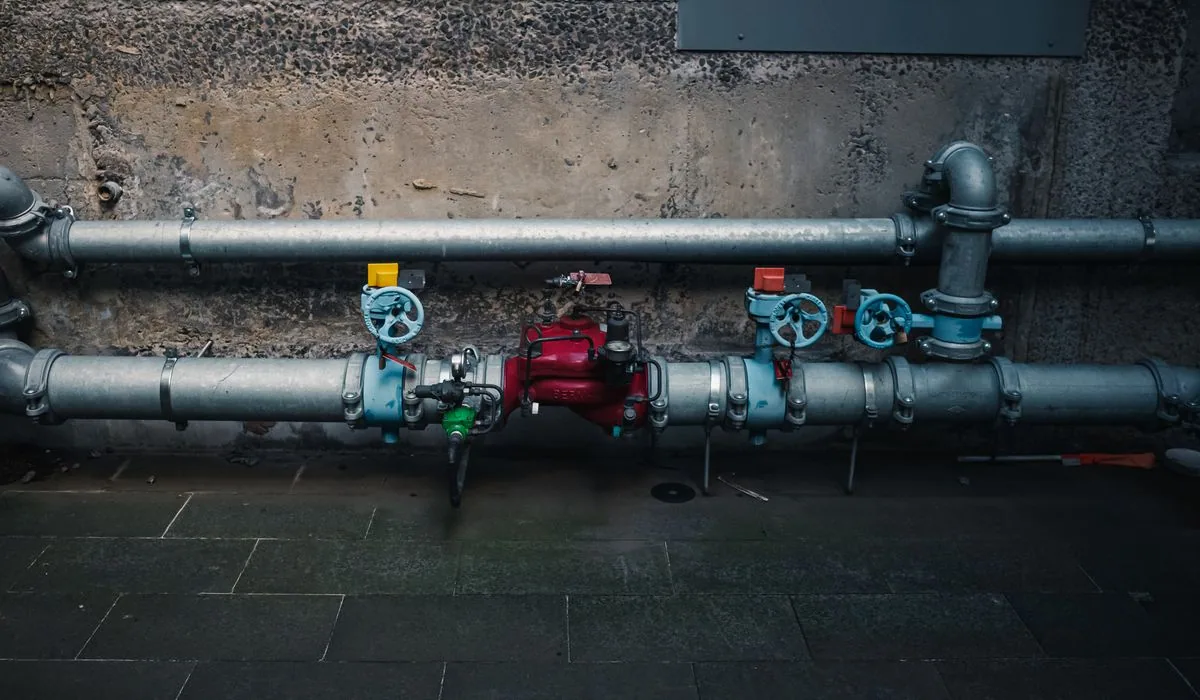
How do the city programs compare?
The mechanics are similar everywhere (annual test, certified tester, report filed with the city), but the details differ enough to burn you. Verified against each city's published program pages as of August 2026:
| Municipality | Who must comply | Test frequency | Report deadline / notes |
|---|---|---|---|
| Toronto (Ch. 851) | Industrial, commercial, institutional + large (Part 3) residential; standard homes excluded | Annual, at install, and within 72 hours of any repair | Online submission by certified specialist; owner keeps records 7 years; surveys every 5 years; device permit fee about $89 |
| Hamilton (By-law 10-103) | ICI + multi-residential | Annual | Original test report due within 14 days; site surveys every 5 years |
| Ottawa (By-law 2013-360) | ~15,000 ICI and multi-residential properties, severe/moderate risk | Annual | Devices registered with the city; testers must be on Ottawa's qualified-persons list; escalates to Provincial Offences Act charges |
| Peel (Mississauga, Brampton, Caledon) | All ICI, multi-residential, and homes over 600 m² | Annual | $57.68/building report fee; surveys renewed every 5 years (3 for severe hazard); device required within 1 year of survey |
| Guelph | All devices, including irrigation and fire sprinkler devices | Annual, at install, after any repair or relocation | Report to the Backflow Coordinator within 14 days; missed deadlines risk water-service disruption |
| London (By-law W-8) | Testable devices (RP, DCVA, PVB) | Annual, at install, after repair or relocation | Tester must be on London's own registered-tester list; report on the approved form within 14 days |
| Waterloo (By-law 2018-026) | ICI, multi-residential, and any building hazardous to the potable supply (irrigation, pools, fire sprinklers, solar heating) | Annual, at install, after cleaning/repair/overhaul, and on request | Reports within 14 days; records on site 7 years; city can shut off water and recover costs through the tax roll |
Two patterns worth noticing. First, the 14-day report deadline shows up in most programs, and it is the step that actually gets contractors and owners in trouble - the test happens, the paperwork does not. Second, several cities layer a registration requirement on top of provincial certification, so a tester who is fully OWWA-certified can still be offside in London or Ottawa without the local listing.
What does backflow testing cost in Ontario?
Nobody ranking for this query publishes a straight answer, so here is the range from Ontario plumbing companies' own published pricing: an annual test runs roughly $100 to $300 per device, with most GTA quotes between $120 and $250 including the report filing. Add the municipal administration where it applies (Toronto's device permit at about $89, Peel's $57.68 per building). A new installation runs roughly $900 to $2,500 for residential and small commercial applications, and $1,500 to $3,500+ for large commercial premise-isolation devices, driven by pipe size and shutdown logistics. Cross-connection surveys (the every-5-years property audit) are billed separately, and while we could not find a citable Ontario price, they are typically quoted per site visit rather than per device.
For a building owner the practical budget line is: number of devices × test fee + any city fee, every year. A commercial building can easily carry five to fifteen separate assemblies once you count the main meter, fire lines, irrigation and boiler feed, which is how a "small" compliance item quietly becomes a four-figure annual line.
Backflow preventer vs backwater valve (Google confuses them, your city does not)
Search for backflow programs and half the results are about basement-flooding subsidies. Different device, different direction, different problem. A backflow preventer protects the municipal drinking water from your building. A backwater valve protects your basement from the sanitary sewer during heavy rain - that is the one with city rebate programs attached. If the letter from your city mentions annual testing and a certified tester, it is about backflow prevention, and no flood-subsidy page will help you.
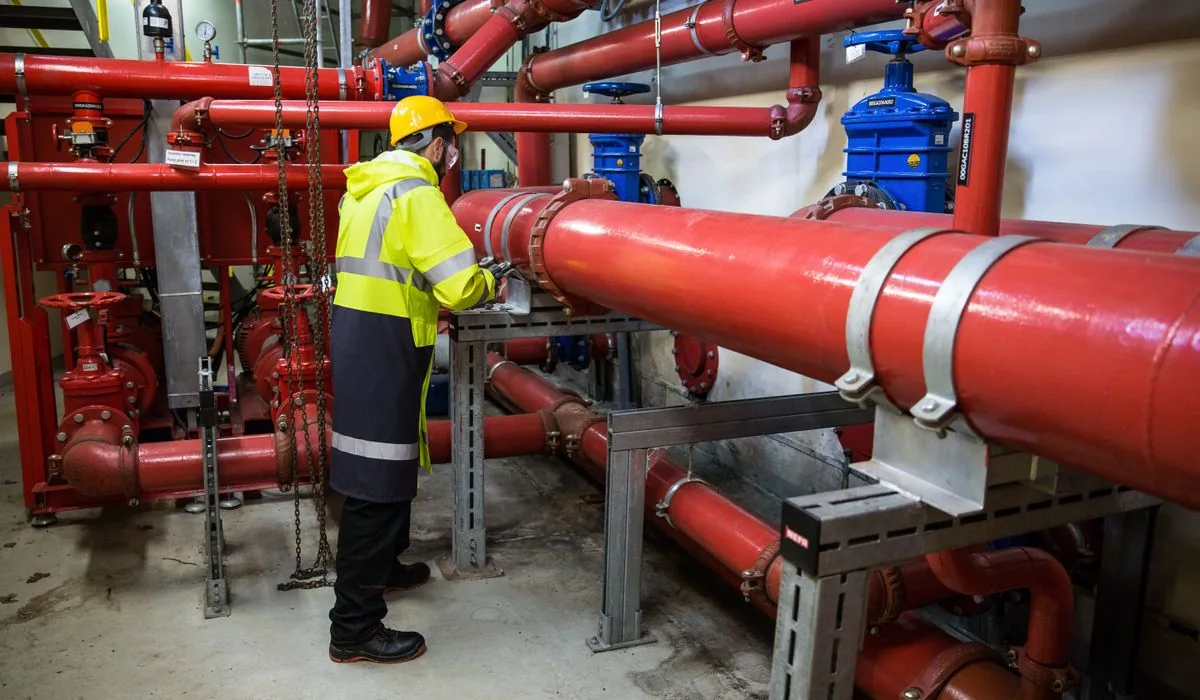
For plumbers: the best boring revenue in the trade
Now the operator side, because this article is written by someone who builds software for service businesses and the economics here are unusually good.
Backflow testing is mandated, annual, and non-discretionary - the customer is not comparison-shopping the way they would on a big install, because the requirement itself is the reason they are calling. Getting certified is accessible: OWWA cross-connection control certification through an accredited college program (George Brown, Conestoga, Mohawk, Algonquin and others), valid 5 years, with re-certification around $800 including the OWWA registration. After that, the shape of the business line (US benchmark data, but the mechanics translate): a tech can clear 6-12 clean tests a day, 10-25% of assemblies fail and convert into repair tickets worth several times the test fee, and established testing routes hold well over a thousand active devices.
Run the Ontario math on a modest book: 200 devices at $150 per test is $30,000 a year of scheduled, repeating revenue, before a single failed check valve turns into a repair. It stacks cleanly on top of regular service work (we ran the hourly economics of that in what a plumber should charge in 2026), and unlike emergency work it books itself a year in advance.
The catch is purely administrative, and while it sounds trivial, it is the part that kills the margin: every one of those 200 devices has its own due date, its own city deadline (14 days, in most programs), and a customer who has completely forgotten the whole thing exists. Miss the reminder and the test slides; the customer gets a violation notice and blames you; the revenue you "owned" goes to whoever answers the phone next (and per the missed-call math, that reassignment happens fast). A 200-assembly book run out of a spreadsheet and someone's memory is a $30,000 line of business with no protection on it.
This is the exact problem we built a tool for. FixyFlow for Ontario backflow programs tracks each assembly's next test date, texts the customer the reminder on an escalating cadence before the deadline, and keeps the SMS log so "why didn't you tell me?" has a timestamped answer.
The licensed tester still files the report - that is the regulated step. FixyFlow covers the part currently living in your head. From $19/month - see pricing.
The owner's checklist
- Find out if your municipality runs a program (if you received a letter or survey notice, it does)
- Know your device count - main meter, irrigation, fire line, boiler feed all count separately
- Book the annual test with a certified tester (the OWWA tester directory is searchable; London and Ottawa also require their own registration)
- Confirm who files the report and by when - 14 days is the common deadline, 72 hours after repairs in Toronto
- Keep your records - 7 years in Toronto and Waterloo
And if you are the plumber reading this: the cities publish their regulated-property counts, the certification is a college course, and the revenue renews every 12 months by law. While glamour is not on the list of things backflow testing offers, technically speaking, neither is churn.
Sources: Ontario MECP backflow program guide; OWWA certification and training; CSA B64.10:23 / B64.10.1:23; program pages for Toronto, Hamilton, Ottawa, Peel, Guelph, London, Waterloo; CBC on the 2005 Stratford incident; City of Markham incident summary. Cost ranges compiled from published Ontario plumbing-company pricing (Anta Plumbing, Deep Water Plumbing, RBA Mechanical, Select Plumbing & Heating). Business-line benchmarks are US-market data (BizBite) - treat as directional for Ontario.
- Lasse / Built FixyFlow in Collingwood