Camera Repair Shop Customer Communication: The Backlog Problem
Last updated: 2026-08-22 · Shop policies and turnaround figures taken from the shops' own published pages, linked throughout.
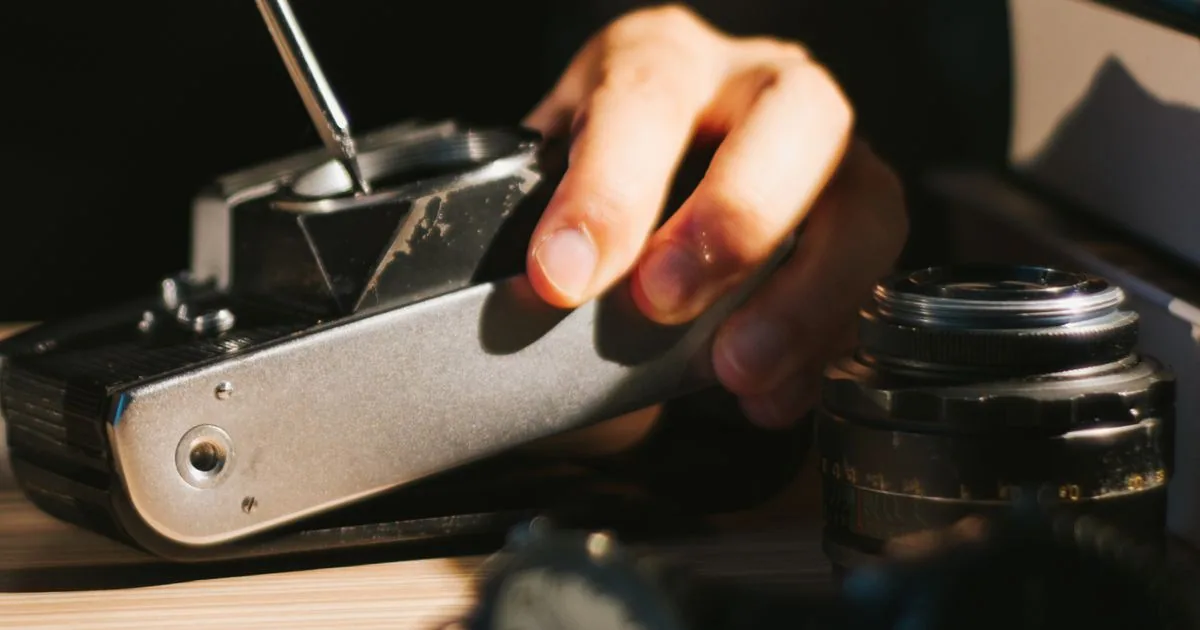
Camera repair has a strange problem: too much demand. The film photography revival handed a shrinking pool of aging technicians more work than they have ever had, so long backlogs are published openly: one UK Nikon F2 specialist lists a current wait of 10 months for F2 bodies. This article is about the communication layer that decides whether that backlog destroys your customer relationships or not - what the best-run benches actually do, the four messages every camera repair needs, and how to handle estimate shock and abandoned gear. The short version: customers forgive a queue. They do not forgive silence.
Why is every camera repair bench suddenly buried?
Both curves moved at once. On the demand side, Fortune reports roughly 42 million active film camera users worldwide, 35% of them aged 18-30, and wholesale film demand up about 127% since 2020. Those cameras are decades old, and every one of them eventually needs a bench.
On the supply side, the benches are disappearing. Nikon shut down its authorized independent repair program in 2020 and had already stopped selling parts to independents; Canon has been publishing rolling end-of-service dates for older bodies. The independent techs who remain are mostly near or past retirement age - ABC's reporting on the trade found fewer than a dozen analog repair techs across all of Australia, and the community's worldwide repair directory reads like a queue-length report: "often long wait times", "waiting list is growing", and a standing plea to get old cameras serviced "while you still can".
The extreme case is instructive: Sover Wong, the UK's Nikon F2 specialist, opens bookings once a year. His last window filled in one minute, 47 applicants missed out, and the next opens in June 2027. That is not a business problem - he has all the business he can hold. Everything left to manage is communication.
What customers actually get angry about
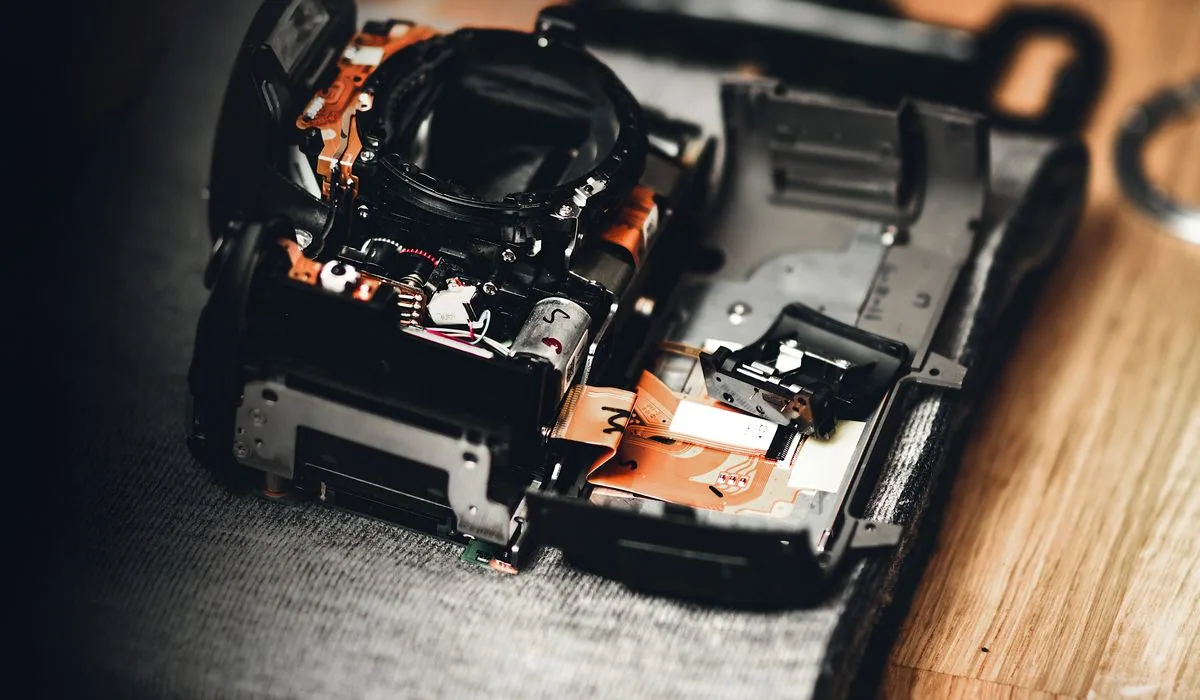
Spend an hour in the film community threads on repair turnaround and a clear pattern shows up: nobody is angry about the wait itself. This comment, from a customer whose camera had been "on the tech's bench, done next week" for several consecutive weeks, is the whole article in two sentences:
"I'd be perfectly happy if they were transparent about their backlog. But they've been telling me 'it's on the tech's bench being worked on and it should be done next week'... for several weeks now. If it's the case they haven't actually started because they have such a backlog, that's 100% cool with me, just don't lie about it." (r/AnalogCommunity)
The false "next week" feels easier in the moment than the honest "you are number 41 in the queue". It is also the only answer that costs you the customer. And while the community's advice to customers is not to pester ("being a pest isn't going to get your camera moved to the front of the line", as one long-running guide to dealing with repair techs puts it), relying on customer restraint is not a system. Every status call still lands on the same bench that is supposed to be clearing the queue - the same interruption math we ran in the real cost of customer calls in a repair shop.
What the best-run benches do differently
Three published examples, three lessons:
- Publish the queue. Blue Moon Camera in Portland states it plainly: expect approximately four months, cameras are worked on in the order received, and a camera "might be in our queue for several months before determining the status of the repair." Nobody who read that page calls in week three.
- Answer fast even when the work is slow. Sover Wong's current wait for an F2 body is 10 months, but his booking page promises: "I always reply within 24 hours." The response time and the repair time are different promises, and customers can hold both.
- Or sell the fast lane. Garry's Camera Repair in Illinois advertises 7-10 day turnaround with flat-rate pricing on common models. That is a communication strategy too - a published number the shop is structured to hit.
The four messages every camera repair needs
A camera repair has more genuine state changes than most counter trades (assessment, estimate, approval, parts hunt, bench, test roll, done), which is exactly why it benefits from status texts more than most. The minimum viable set:
1. Intake, with the honest window.
"Hi Sarah, your Canon AE-1 is checked in at Northside Camera. Current queue is about [your queue length] before assessment - we'll text you the estimate before any work starts. Track it here: [link]"
2. The estimate, after teardown. This is the message that prevents the dispute, because in this trade the estimate routinely exceeds what the customer paid for the camera. A technician in a thread on exactly this put the bench's side bluntly: the hourly rate to fix mechanical cameras has never gone down, and what you paid on eBay is not his problem. The customer-side reframe from the same thread is the one worth texting: it is not a $150 service on a $50 camera, it is a $150 service on a $600 camera you got for $50. Send the estimate in writing, itemised, with a one-tap approve or decline - a decline that costs nothing protects you from the abandoned-gear problem below.
3. The parts delay. Parts for most film cameras have not been manufactured in decades; they come from new-old-stock or donor bodies, and for some models (Pentax 67 owners know) the norm is literally sending a second camera to be harvested. A donor hunt can stall a repair for weeks. One text ("still waiting on a shutter assembly from a donor body - you're not forgotten") converts that dead air from suspicion into craftsmanship.
4. Ready for pickup, with a clock. Every camera shop eventually eats storage on gear nobody collects, which is why published policies exist: 90 days after notification and it is disposed of at The FIND Lab, 30 days at Unique Photo. A clause only protects you if you can prove the notification - a timestamped "ready for pickup" text, re-sent at day 14 and day 30, is that proof. It is the same mechanic covered in how appointment reminders reduce no-shows and forgotten pickups in a repair shop.
The sentimental-value tax
A meaningful share of a camera bench's intake is inherited gear - grandpa's Leica, a parent's wedding camera. Those customers are often the least price-sensitive (the camera matters for who owned it, not for what it would sell for) and the most anxious, because the item is irreplaceable. They are also the customers most likely to call. A tracking page they can check whenever the worry hits - without ringing the bench - is worth more to them than to anyone else in your queue, and the same is true across the counter trades we covered in jewelry repair software and order tracking for tailor and watch shops.
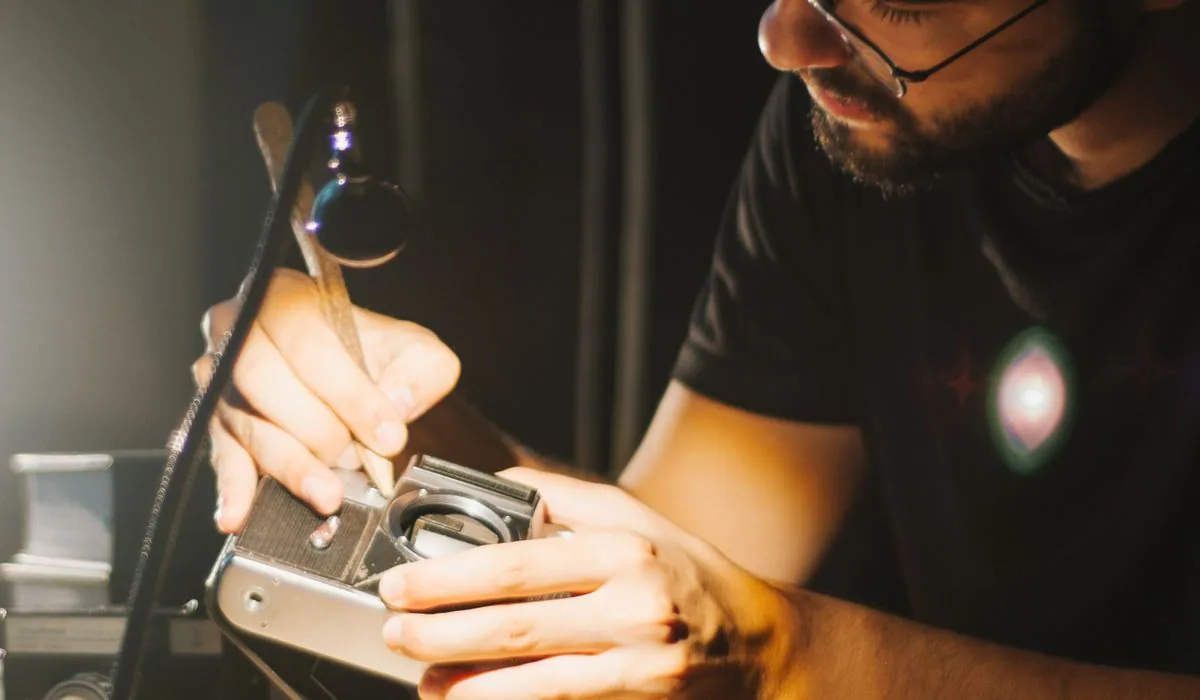
Where FixyFlow fits a camera bench: every repair gets a tracking page the customer reaches from the intake text - no app, no account. Move the job through your own stages (Queued, Assessing, Awaiting approval, Parts hunt, On the bench, Testing, Ready) and the status text sends itself. Estimates get approved with one tap, and the pickup notification is logged with a timestamp your abandonment policy can lean on.
Free for up to 5 jobs a month, $19/month on Starter - see FixyFlow's field service software pricing. Built for exactly this kind of one-person, long-queue bench.
The honest summary
The camera repair trade does not have a demand problem, a pricing problem, or (for the shops still open) a competition problem. It has a queue, and a customer base that checks in on irreplaceable objects. The shops that thrive on a 4-month backlog publish the wait, answer fast even when they repair slow, and send a short message at every real state change. The ones that say "next week" for six straight weeks lose the customer and still have the backlog. While the bench time is finite, technically the communication never has to be the bottleneck - it is the one part of the job that automates cleanly.
Sources: Fortune on the Gen Z film revival; C&EN on film demand; ABC News on retiring repairers; DPReview on Nikon's repair program; Blue Moon Camera repair FAQ; Sover Wong F2 repair; Garry's Camera Repair; Camera Repair Worldwide Directory; Beyond the Aperture on dealing with repair techs; community threads linked in the body. Turnarounds and policies change; check each shop's current page.
- Lasse / Built FixyFlow in Collingwood